It's not even close! Comparing the Honda 520 Foreman and the Can-Am Outlander 500

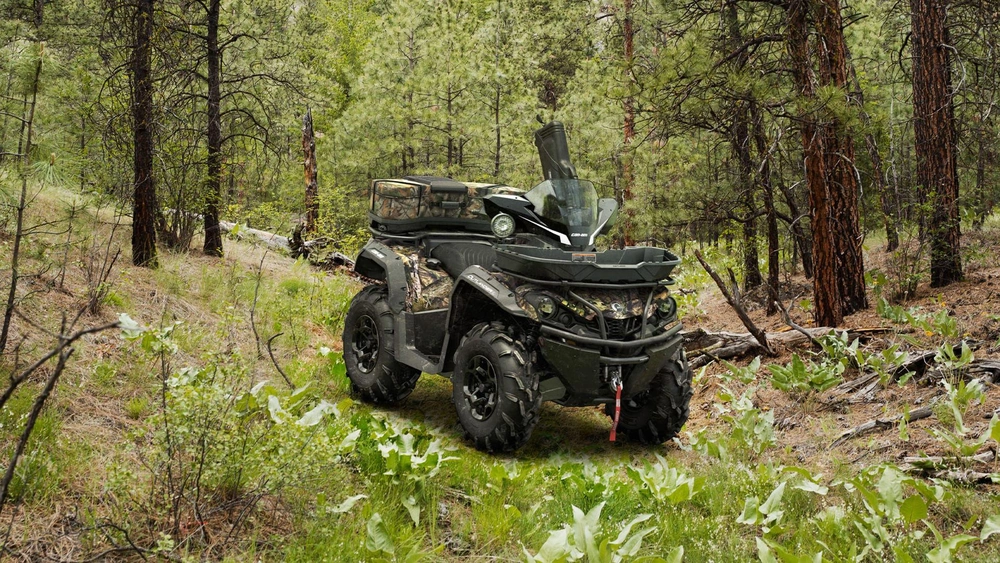
It’s Not Even Close! Comparing the Honda Foreman 520 vs the Can-Am Outlander 500
If you’re shopping for a mid-size ATV in Canada, especially for a mix of work and trail riding, this is one of the most common comparisons out there. On paper, they might look similar. In reality, they deliver two completely different experiences.
When it comes to mid-size ATVs built for both work and recreation, the Honda Foreman 520 and the Can-Am Outlander 500 are two of the most commonly compared machines on the market. On the surface, they seem to target the same rider. Reliable, capable, and ready for everything from hauling on the farm to weekend trail rides. But once you look closer at how they’re built, how they perform, and what real riders are saying, a clear gap starts to emerge. One is designed to be a dependable tool that will run for years with minimal fuss. The other is built to deliver power, comfort, and a far more versatile riding experience. And when you put them head-to-head, the difference is bigger than most people expect.
After digging through real rider feedback, long-term ownership opinions, and practical use cases, one thing becomes clear:
For most riders today, it’s not even close.
Shop Outlanders HERE
Power & Performance: This Is Where the Gap Starts
Let’s get straight to it.
The Can-Am Outlander platform is built around performance. Even in the 500 to 700 class, it delivers significantly more horsepower, faster throttle response, and a more aggressive riding feel.
Riders consistently say things like:
- “Wanna go fast? Can-Am.”
- “More power than I’ll ever need.”
- “Not even the same class.”
Meanwhile, the Honda Foreman 520 is tuned for controlled, steady output. It’s predictable, but not exciting.
What that means in real life:
- Trail riding → Can-Am wins easily
- Hills, mud, aggressive terrain → Can-Am dominates
- Light utility cruising → both are fine
If fun matters at all to you, the Outlander pulls ahead immediately.
Ride Quality & Comfort
This is another category where the difference is obvious the moment you sit on both machines.
The Outlander offers:
- Independent rear suspension
- Softer, more forgiving ride
- Better handling at speed
The Foreman:
- Feels stiffer and more “work-focused”
- Less forgiving over bumps and rough terrain
Real-world feedback backs it up:
- “The Can-Am is comfortable and fast.”
- “Honda rides hard… but never breaks.”
So it comes down to this:
If you’re riding for hours, covering distance, or mixing work with recreation, comfort matters more than you think. That’s where Can-Am separates itself.
Work Capability: Not as One-Sided as You Think
Traditionally, Honda has owned the “workhorse” reputation. And yes, there’s truth to that.
The Foreman 520 offers:
- Gear-driven transmission (no belt)
- Extremely consistent torque delivery
- Long-term durability with minimal upkeep
But the gap is closing fast.
Modern Outlanders now bring:
- Higher towing capacity
- More storage options
- Better ergonomics for working
- Multiple drive modes for control
Even commercial operators running fleets of Outlanders report strong reliability when properly maintained.
So while Honda still wins in “simple and bulletproof,” Can-Am is no longer just a “play machine.”
Features & Innovation
This is where Honda starts to feel dated.
Common feedback:
- “Same design for the last 10 years.”
- “Feels like a 20-year-old machine.”
Meanwhile, Can-Am continues to push:
- Better chassis design (G2 / G3 platforms)
- More removable panels for service
- Improved storage and ergonomics
- More modern styling and tech
Even small things matter. For example, some riders noted the lack of a proper hitch receiver on the Foreman from factory, which feels like a miss in a work ATV.
Final Verdict: It’s Not Even Close
For the majority of riders today, especially those doing a mix of work and recreation, the Can-Am Outlander simply offers more:
- More power
- Better ride
- More capability
- More enjoyment
Honda still owns the “set it and forget it” category. But if you actually plan to ride your ATV, not just use it as a tool, the Outlander is on another level.
And that’s why, for most buyers in 2026:
It’s not even close.